
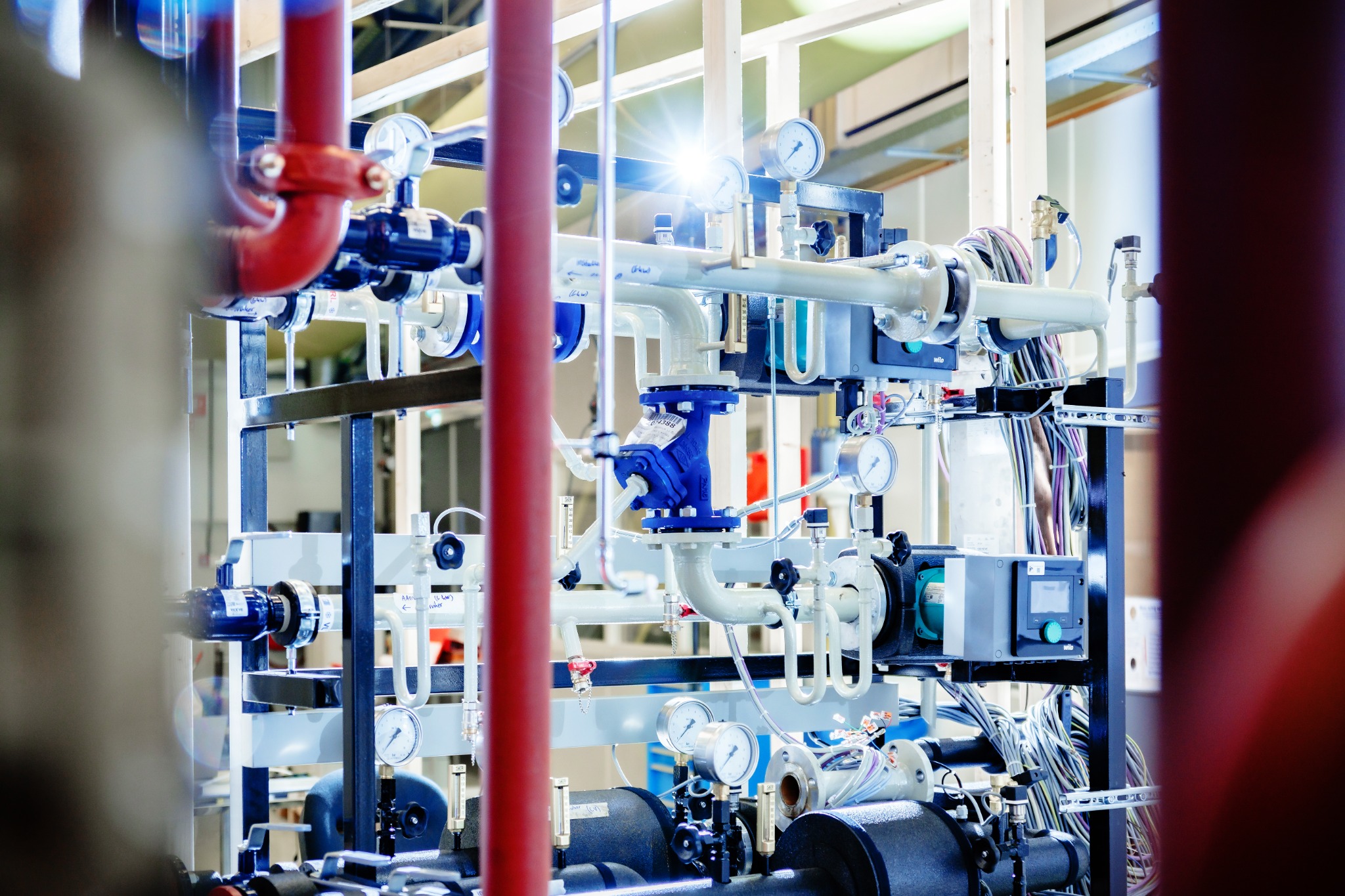
Help your entire site
think ahead.
Your production must keep running. Your energy supply must adapt. Flow coordinates generation, conversion, storage and flexible consumption — accounting for energy prices, grid limits and process requirements.
01Anticipate supply and demand
02Operate assets as one system
03Stay within process and grid limits
Your process sets the limits.
Flow finds the flexibility.
The best use of an asset depends on what the rest of the site needs.
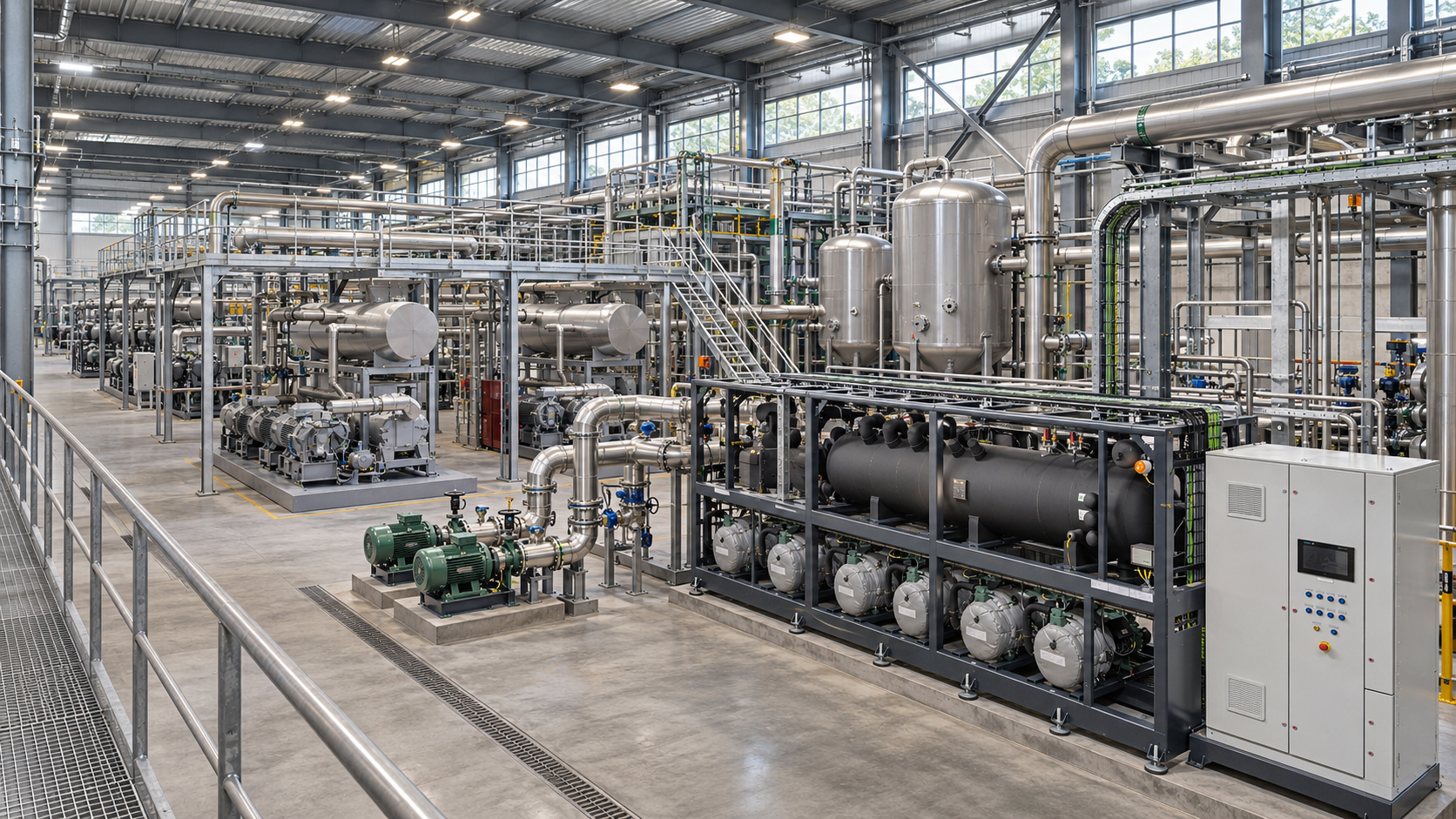
When should you produce heat? When should you charge a buffer? Which conversion technology best matches current energy demand, price and available capacity?
Flow brings these choices together in a forward-looking plan. Required supply and agreed operating conditions are the starting point.
Connected utilities
Align generation, conversion and storage with process demand.
Connect to existing control systems
Use agreed control interfaces and retain local responsibility for execution and protection.
Align energy costs with operations. Make the impact of asset operation visible within agreed process requirements, contracts and grid limits — with a clear baseline for assessment.
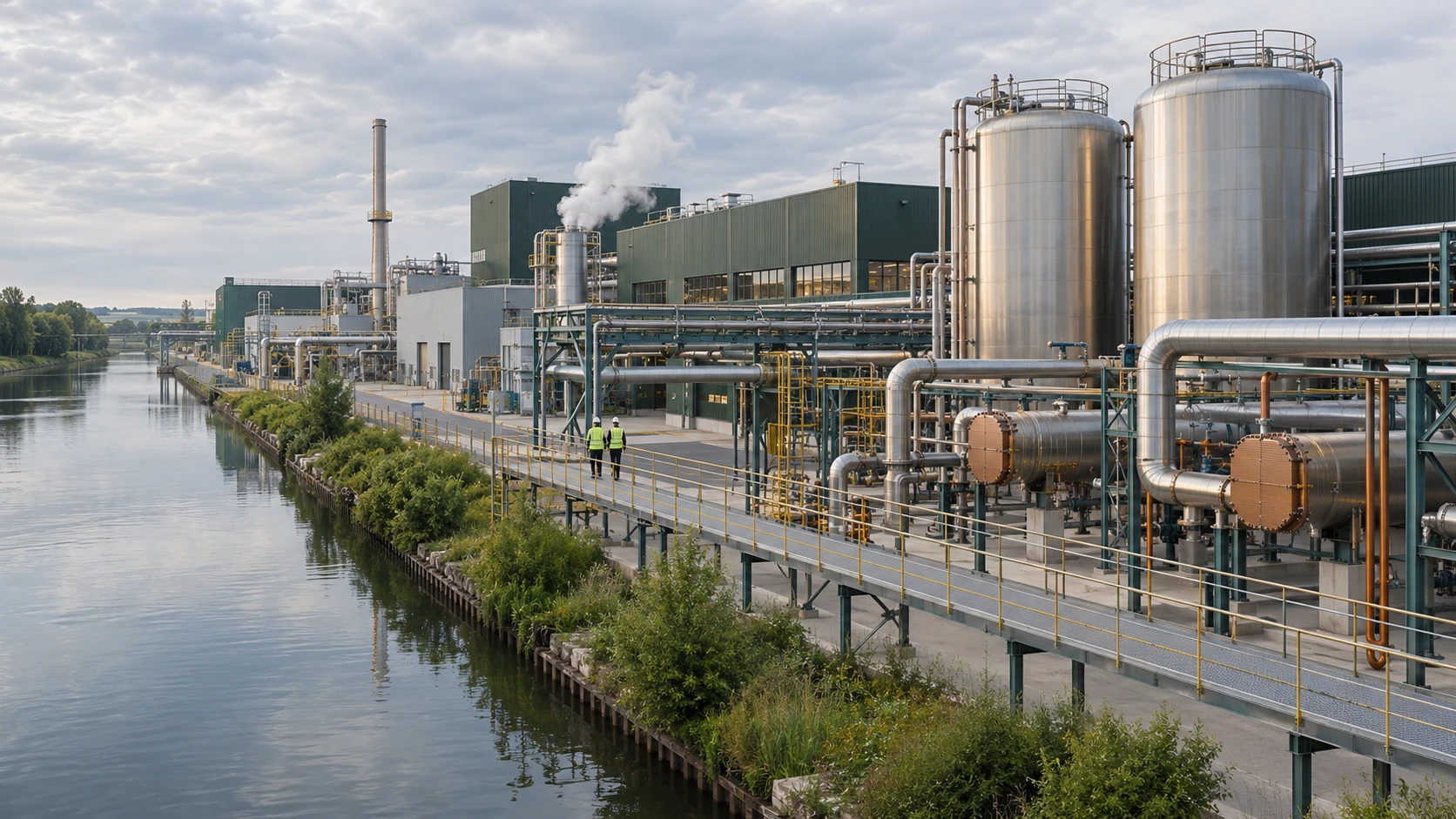
Every installation has a task.
Together, they have more options.
Flow considers the relationships between energy vectors, buffers and grid connections. Electricity, heating and cooling can be included in one plan; other process flows are included where supported by the models and interfaces.
Go beyond reacting.
Consider what comes next.
Demand changes. Prices shift. An asset becomes available. Flow updates the plan using the available data and agreed limits.
Production starts up.
Flow brings expected energy demand, available assets and agreed process limits together in a plan for the coming hours.
Illustrative daily scenario. Actual actions depend on the assets, control interfaces, process requirements and available flexibility.
What flexibility is already in your site?
We explore the assets, control interfaces and success criteria for a focused pilot.
Smart at system level.
Careful at installation level.
Flow uses Evana as the optimisation engine for daily operation. SYNAPSE connects data, platform services and control interfaces. Local controllers retain their own tasks: running the process, closing control loops and protecting the installation.
Forecast, evaluate
and coordinate.
Combines demand and price forecasts, measurements, asset models and constraints into a plan. Provides high-level schedules or setpoints through agreed interfaces.
Execute, control
and protect.
Handles local execution. Control loops, interlocks, equipment protection and fallback remain secured locally.
The allocation of responsibilities, available commands and fallback are defined for each project. Optimisation does not override operational limits.
Use flexibility.
Substantiate performance.
We define the assessment method in advance. The comparison accounts for equivalent supply and the same relevant constraints.
Manage power demand.
Investigate how asset operation and storage can help manage peaks within the available connection capacity.
Operate with costs in mind.
Align generation, conversion and storage with prices, efficiencies and technical limits.
Show what changes.
Compare actual operation against an agreed baseline and make assumptions and results transparent.
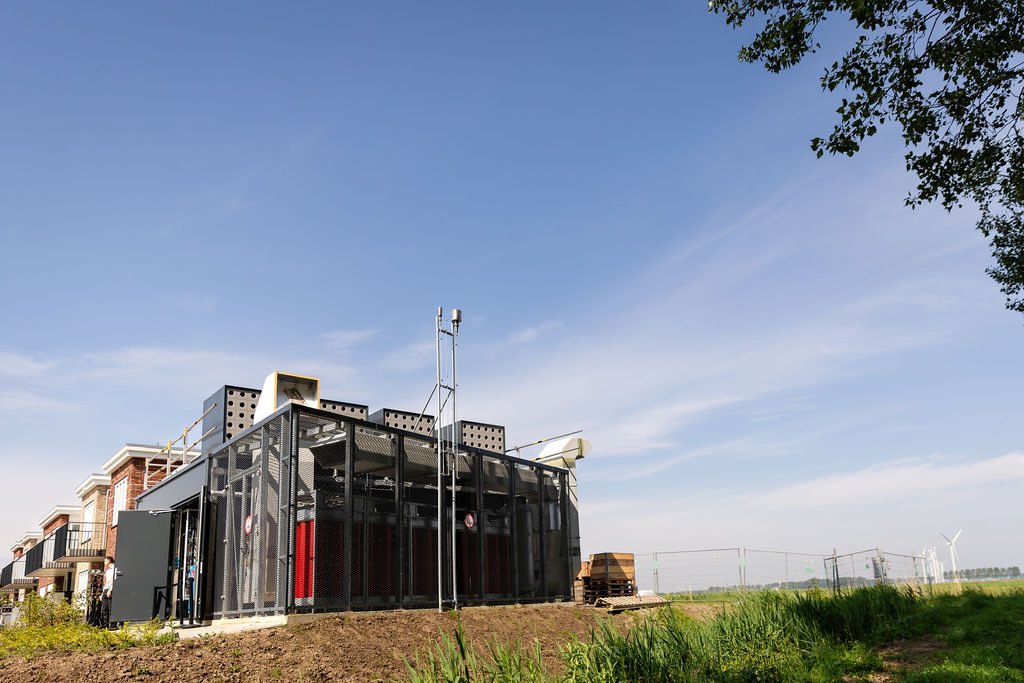
Real assets.
Real operations.
InnovaHub in Stad aan ’t Haringvliet provides a practical foundation for the interaction between software, local control and a physical energy installation.
This operational experience informs Flow’s development. For an industrial application, we adapt the approach to your processes, interfaces and supply requirements.
A focused pilot therefore starts with the reality of your site.
Insight sharpens design.
Control takes it further.
Pulse, Evana and Flow connect actual performance, design choices and daily optimisation through SYNAPSE. Each step provides insights for the next.
Select a product in the flywheel to learn more. The current product page is highlighted.